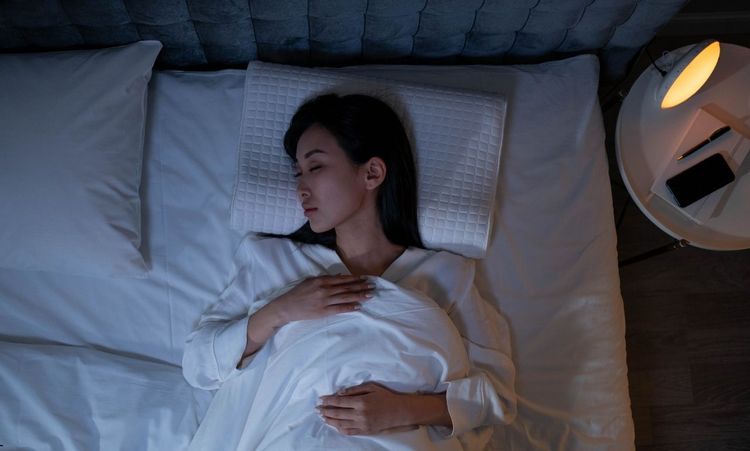
Eight hours of sleep does not always produce eight hours' worth of feeling restored. Someone who sleeps from 10 p.m. to 6 a.m. may wake feeling considerably different from someone who gets the same duration from 3 a.m. to 11 a.m., even when neither person was repeatedly awakened. The reason is that recovery depends not only on how long sleep lasts but also on how well it aligns with the body's internal timing system.
Sleep Duration Is Only One Part of Recovery
Sleep recommendations are often expressed in hours because duration is easy to measure and clearly matters.
Too little sleep reduces the opportunity for the body and brain to complete important restorative processes. Getting enough time in bed is therefore a fundamental part of healthy sleep.
Duration, however, does not tell the whole story.
Sleep also has timing, regularity, continuity, and architecture. Two people can each sleep for eight hours while experiencing different combinations of these factors.
The body does not simply shut down whenever someone decides to go to bed. Biological processes continue following roughly 24-hour patterns that influence alertness, temperature, hormones, digestion, and sleepiness.
Sleeping against those patterns can change how restorative a full night's sleep feels.
Your Circadian Rhythm Sets an Internal Schedule
The circadian system acts as an internal timing network.
It helps coordinate physiological processes with the expected cycle of daylight and darkness.
A central biological clock in the brain receives information about environmental light and helps synchronize rhythms throughout the body.
This influences when people naturally become sleepy and when they tend to become alert.
Circadian timing also affects body temperature, hormone release, metabolism, and numerous other processes.
That is why sleep cannot be understood purely as a countdown of hours.
Going to sleep at a biologically appropriate time generally means sleep occurs while multiple systems are already shifting toward nighttime physiology.
Sleeping at an unusual time can require the body to maintain sleep while some of those systems are beginning to promote wakefulness.
Why Sleeping at Different Times Affects Recovery Through Light Exposure
Light is one of the strongest signals used by the circadian system.
Bright light during the day supports daytime alertness and helps establish the timing of the internal clock. Darkness in the evening contributes to the biological transition toward sleep.
Modern lifestyles can disrupt that pattern.
Someone staying awake until 3 a.m. may spend several additional hours exposed to indoor lighting and illuminated screens. A person sleeping late into the morning may then receive less morning light.
Over time, this can shift circadian timing.
The issue is not that looking at a screen automatically destroys sleep. Light exposure depends on brightness, duration, timing, distance, and other factors.
The broader problem is that late-night light can provide the body with a different timing signal from the natural light-dark cycle.
Melatonin Follows Biological Timing
Melatonin is frequently described as a sleep hormone, but its role is more accurately understood as part of the body's nighttime signaling system.
Under typical conditions, melatonin levels rise in the evening as biological night approaches.
Its timing is influenced strongly by the circadian system and light exposure.
A person who repeatedly stays awake late may be active during a period when the body is signaling biological night.
Conversely, sleeping late into the morning can extend sleep into a period when melatonin is declining and the body's wake-promoting signals are strengthening.
This helps explain why simply shifting the same eight hours across the clock does not necessarily create an identical physiological experience.
Sleep is interacting with a biological schedule rather than occurring independently from it.
Body Temperature Helps Organize Sleep and Wakefulness
Core body temperature changes throughout the day and night.
It generally declines as biological night develops and reaches a low point during the sleep period before rising again toward morning.
These temperature changes are part of circadian organization.
Falling temperature supports the transition toward sleep, while the later rise accompanies increasing biological readiness for wakefulness.
Sleeping during an unusual part of the day can place sleep against a less favorable temperature pattern.
Someone trying to sleep well into daylight may be doing so while the body's temperature rhythm is moving toward a more wake-promoting state.
This does not make daytime sleep impossible. Shift workers demonstrate that people can sleep at many times.
It does help explain why maintaining long, uninterrupted, restorative sleep during biologically unusual hours can be difficult.
Sleep Stages Are Not Distributed Evenly
Sleep is composed of several stages rather than one uniform state.
Across the night, the brain cycles through non-rapid eye movement sleep and rapid eye movement, or REM, sleep.
The proportions change as the sleep period progresses.
Deeper non-REM sleep tends to be more concentrated earlier in a typical sleep episode, while REM periods generally become longer later.
This architecture matters because different aspects of sleep appear to support different forms of physical and cognitive restoration.
Merely counting total hours can therefore hide meaningful differences in sleep structure.
Repeated interruptions, circadian misalignment, alcohol, certain medications, sleep disorders, and other factors can alter how those hours are organized.
A person can technically remain asleep for a long period without experiencing exactly the same sleep architecture as someone sleeping under more favorable conditions.
Deep Sleep Supports Physical Restoration
Deep non-REM sleep is often associated with physical restoration.
During sleep, the body coordinates processes related to tissue maintenance, immune function, metabolism, and hormonal regulation.
This does not mean that muscles literally repair only during one specific sleep stage or before a particular hour on the clock.
Claims that sleep before midnight is automatically worth twice as much as sleep afterward oversimplify the biology.
The more meaningful issue is whether sleep timing is aligned with the person's circadian system and whether sleep remains sufficiently deep and continuous.
For someone recovering from demanding exercise or physical work, getting adequate total sleep remains crucial.
Consistent timing can complement that duration by making it easier for the body to maintain stable sleep-wake patterns.
REM Sleep Plays a Major Role in Mental Recovery
Physical tiredness is only one form of fatigue.
Sleep also supports learning, memory, emotional processing, and cognitive performance.
REM sleep becomes especially prominent during later portions of a typical night's sleep.
Cutting sleep short in the morning can therefore reduce some of these later sleep opportunities even when the person obtained substantial deep sleep earlier.
An irregular schedule can create a different problem.
If wake times vary dramatically from day to day, sleep may repeatedly be interrupted at different biological points.
The result can be mornings when someone technically slept for a reasonable duration but feels mentally foggy or emotionally less refreshed.
Recovery is therefore both physical and neurological.
How alert someone feels after sleep depends partly on what happened inside those hours.
Regularity Helps the Body Anticipate Sleep
The body adapts to patterns.
Going to bed and waking at approximately consistent times provides predictable timing signals.
As bedtime approaches, biological systems can begin shifting toward sleep. Toward the expected waking period, the body starts preparing for daytime activity.
Constantly changing the schedule makes that prediction more difficult.
A person who sleeps at 10:30 p.m. on weekdays, 2:30 a.m. on Friday, 4 a.m. on Saturday, and midnight on Sunday is repeatedly moving the sleep period.
Total weekly sleep duration could still look reasonable.
Yet the internal clock is receiving inconsistent timing information.
This is one reason sleep regularity has become an important part of discussions about sleep health rather than treating total hours as the only meaningful measurement.
Weekend Schedule Changes Can Resemble Mini Jet Lag
Sleeping much later on weekends can feel like catching up after a demanding week.
Extra sleep may indeed help when someone has accumulated sleep loss.
The timing shift, however, can create another challenge.
Moving bedtime and wake time several hours later changes exposure to light, meals, activity, and social cues. Returning abruptly to an early Monday schedule then requires another shift in the opposite direction.
This pattern is sometimes discussed as social jet lag because the person's social schedule and biological timing become misaligned.
It is not identical to flying across several time zones, but there is a similar underlying idea: the clock schedule changes faster than the circadian system can comfortably adjust.
The result can be a surprisingly difficult Monday morning despite substantial weekend sleep.
Shift Workers Face a More Difficult Timing Problem
For people who work overnight, sleeping at conventional nighttime hours may simply be impossible.
Their recovery challenge is therefore different.
A night worker may need to sleep while sunlight, household activity, traffic, and the circadian system all promote wakefulness.
Daytime sleep is often more vulnerable to interruption.
Environmental strategies can help create better conditions. A dark sleeping environment, comfortable temperature, reduced noise, and a sufficiently long protected sleep opportunity can all matter.
Consistency can also be useful when practical, although family obligations and changing shift patterns often make it difficult.
Shift work illustrates an important point: sleep timing is not purely a lifestyle preference. Employment and social responsibilities can strongly determine when people have an opportunity to sleep.
Exercise Recovery Depends on More Than Bedtime
Athletes and regular exercisers sometimes search for a perfect sleep window that will maximize recovery.
There is no single bedtime that works universally for everyone.
Recovery depends on training load, nutrition, hydration, stress, sleep duration, sleep quality, health, and individual circadian tendencies.
Someone consistently sleeping seven or eight hours on a schedule that fits their biology may recover better than someone pursuing an allegedly ideal bedtime while repeatedly cutting sleep short.
The timing of exercise can also influence when a person feels ready to sleep.
Late intense activity is comfortable for some people but stimulating for others.
The practical objective is not to chase one magical hour. It is to create enough sleep opportunity at a reasonably stable time that fits both biological needs and everyday responsibilities.
Chronotypes Create Genuine Individual Differences
Not everyone naturally becomes sleepy at the same hour.
Some people tend toward earlier sleep and waking, while others naturally prefer later schedules.
These tendencies are often described as chronotypes.
Age influences them as well. Adolescents and young adults frequently show later circadian timing than many older adults.
This means comparing two people solely by bedtime can be misleading.
An 11 p.m. bedtime might align comfortably with one person's biology and feel unnaturally early to another.
The important question is whether sleep occurs at a reasonably consistent time that fits the individual's circadian tendencies while allowing adequate duration.
Extreme mismatches between natural timing and required schedules can make this difficult, particularly when early work or school commitments force late chronotypes to wake before obtaining enough sleep.
Meal Timing Can Reinforce the Daily Rhythm
Light is a dominant circadian signal, but it is not the only recurring feature of daily life.
Meal timing, physical activity, work, and social routines also help organize the day.
Late-night eating often accompanies delayed sleep schedules.
Someone awake several hours later may eat additional meals or snacks at times when their body would normally be fasting overnight.
Irregular schedules can therefore shift several behaviors simultaneously.
This makes it difficult to attribute poor recovery to bedtime alone.
The person who sleeps irregularly may also exercise inconsistently, consume caffeine later, eat at different times, or receive less daylight.
Sleep timing works within this broader network of daily rhythms.
Improving regularity often means stabilizing more than the moment the bedroom light is switched off.
Waking at the Wrong Moment Can Affect How Rested You Feel
Sometimes a person feels terrible after adequate sleep because of what happens immediately after waking.
Sleep inertia describes the temporary grogginess and reduced performance that can occur after awakening.
Its intensity varies.
Waking from deeper sleep can make the transition feel more difficult, while circadian timing also influences alertness.
This means subjective recovery is not a perfect measurement of whether sleep was physiologically useful.
A person can initially feel sluggish and become alert after some time.
Repeatedly waking at a biologically unfavorable hour, however, can make mornings consistently harder.
This is especially relevant when an alarm forces awakening significantly earlier than the body's preferred schedule.
Consistency Usually Matters More Than Perfection
Sleep advice can become unnecessarily rigid.
Real life includes late dinners, travel, social events, childcare, work deadlines, and occasional nights when bedtime shifts.
One late night does not erase recovery.
The larger concern is the repeated pattern.
If sleep timing changes dramatically every few days, the body receives inconsistent signals. If the schedule is relatively stable most of the time, occasional variation is easier to accommodate.
Adequate duration should remain a priority.
Consistency cannot compensate for chronically insufficient sleep.
The strongest approach combines enough sleep with a reasonably regular schedule, appropriate light exposure, and conditions that allow sleep to remain continuous.
That is more realistic than searching for a universally perfect bedtime.
Conclusion
Recovery begins before someone actually falls asleep. The body's temperature rhythm, hormone patterns, light exposure, activity, and internal clock have already been preparing either for rest or for wakefulness. Moving sleep across the clock therefore changes the biological environment in which those hours occur.
This helps explain why sleeping at different times affects recovery even when the duration appears identical. Eight hours aligned reasonably well with circadian timing may not feel the same as eight hours repeatedly pushed into a period when the body is increasingly promoting wakefulness. Differences in sleep stages, light exposure, regularity, and awakening time add further variation.
The useful goal is not to become anxious about a precise bedtime. Sleep duration remains essential, and individual schedules differ. A consistent pattern that provides enough sleep and fits a person's biological tendencies and responsibilities is generally more meaningful than treating every eight-hour period as interchangeable simply because the number on the clock adds up the same.